The Tectonic Plates of Global Commerce Are Shifting. Are Southeast Asian Companies On A New “Rim Of Fire?”

Easy answer: Yes, definitely.
But then again, Southeast Asia was on the old rim of fire. And on the one before that. And on the one before that.
Southeast Asian businesses know that being around fire can mean danger. But it has always meant opportunity. And it means both danger and opportunity, now more than ever before.
Southeast Asia is playing on the rim of fire with new rules. And the new rules are driven by geopolitics.

Signet Law Practice
I am William D. Signet, an American international business lawyer and advisor. My background includes practicing with major international law firms, teaching at the University of Texas School of Law, and authoring several major legal publications for West Publishing. I am a recognized expert in helping foreign companies invest in and trade with the North American region, particularly through Mexico.
To know more about me and my practice, kindly look here.
Earlier in my career I represented Japanese and European companies entering the North American market. Now my focus and interest have moved to countries like Vietnam, Malaysia, Thailand and Indonesia. Why?
Because Southeast Asia may well be a major beneficiary of the new rules of global commerce.
Geopolitics has already changed supply chains in Southeast Asia:
In 2025, Chinese exports to the United States plummeted by $132 billion, or 29.9%, which the U.S. administration welcomed.
But in the same year China’s exports to Southeast Asia increased by $78.6 billion.
And Southeast Asian exports to the United States surged by $102.6 billion, or 29.2%
And those numbers measure only Southeast Asia’s direct exports into the United States. Southeast Asian exports to Mexico increased by $12.9 billion, or 26.2%, in 2025, reaching nearly $62 billion.
And it wasn’t just mangos and batik. According to Banco de Mexico, the largest import categories were:
Vietnam:
Of the $22.36B in 2025, about $8.77B was electrical/electronic equipment and $8.01B machinery.
Malaysia:
Mexico's largest 2024 import category was integrated circuits, worth about $6.03B.
Thailand:
The largest import category was data-processing machines and units, about $3.46B in 2024.
Did Chinese manufacturing get so worse, and Southeast Asian so better, in a single year?
Probably not.

What we offer
We can be particularly useful in Mexico…
Southeast Asian companies considering expansion into the North American market, either through enhanced exports or direct investment, --and particularly those who see Mexico as an intermediate marketing opportunity,-- may benefit from an advisor who is not part of a large firm (nor bills like a large firm) but who knows the big picture. I can help Southeast Asian companies and their local counsel;
· devise the best commercial strategy,
· choose the right geographical and logistical plans,
· frame legal issues properly,
· develop the necessary relationships with vendors, professionals, service providers, and relevant governmental agencies,
among other things.
If you are an executive of a Southeast Asian company who is interested in learning more, please get in touch with me to discuss your interests and concerns.
If you are a lawyer, advisor or other professional in Southeast Asia, let’s talk about ways in which we can collaborate to better serve your clients’ interests.

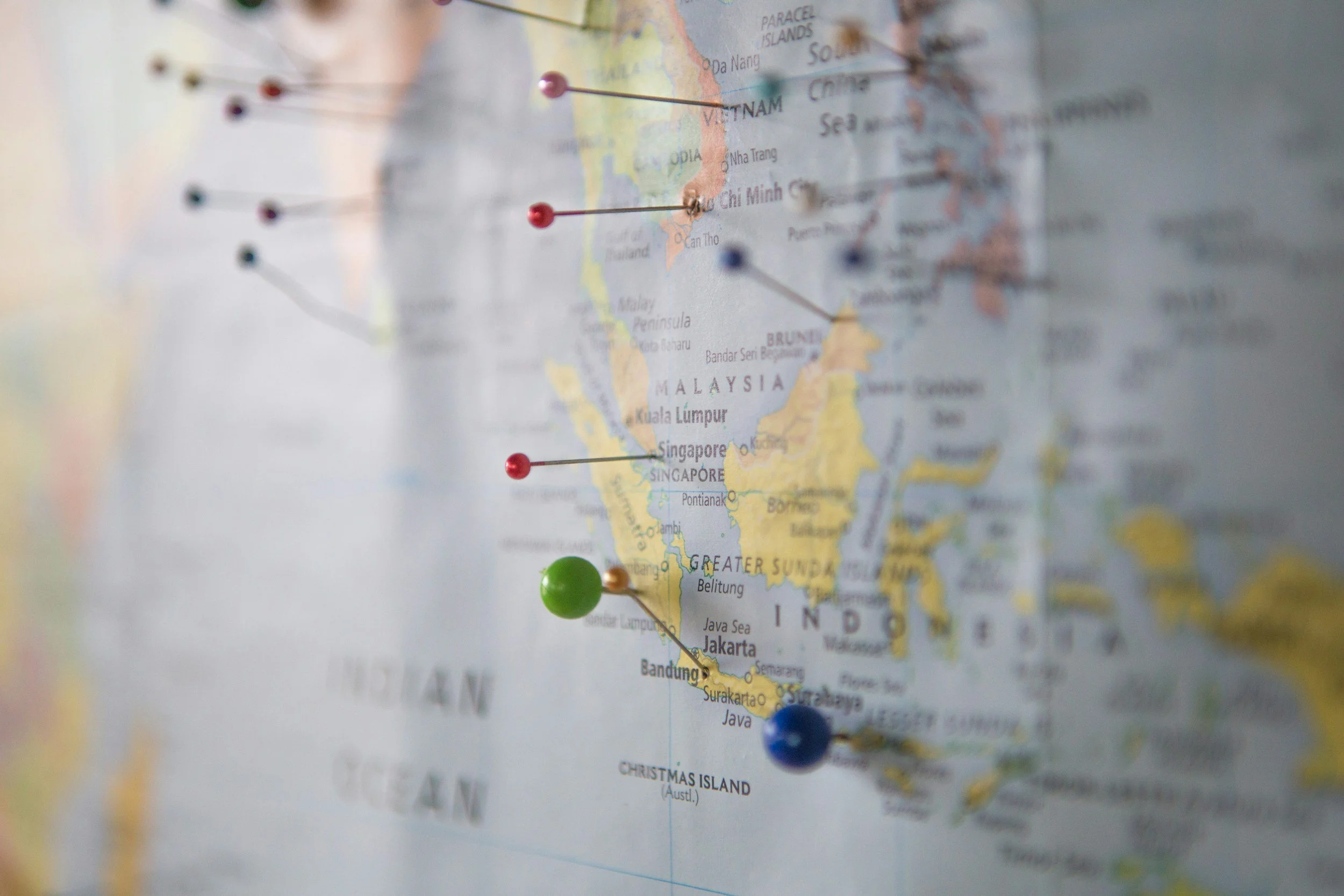
..and in the wider area of U.S. sanctions and trade control laws
At the same time it should not be forgotten that Southeast Asia’s new opportunities in North America take place in an environment of U.S. sanctions and trade control laws.
These sanctions programs are extremely relevant to Southeast Asian companies who may:
Incorporate Chinese-origin high tech components into certain products sold into the North American area, via the U.S.-Mexico-Canada Trade Agreement.
Or, conversely, incorporate U.S.-origin or “dual-use” components into products sold to China, North Korea or other sanctioned entity.
Deal in products such as crude oil or refined products originating in Iran or Russia;
Do business with individuals or related entities who are on “lists,” including, quite easily, drug-cartel controlled businesses in Mexico.
U.S. government agencies routinely prosecute Southeast Asian entities for a variety of sanctions violations. See a partial list.
We can help Southeast Asian companies deal with U.S. sanctions and trade-control issues from the right perspective: that of U.S. lawyers with wide practical experience in international business.